Giardini per persone non banali

Autore: giardino

  • “I can’t find workers for my company”

    1

    What does it mean that there is a “workforce crisis”?

    I don’t want to demonize those who honestly work and “entrepreneur” and face difficulties.

    Let’s proceed by hypotheses, more or less deconstructed:

    1) I own a business. I don’t have the means or the skills to do my job myself.

    1a) Does this mean I’m not good enough?

    Perhaps everyone has their own role to play.

    2) I hire someone to do a job for me. What kind of employment relationship is it? Hierarchical?

    Equal? That is: do I consider myself a CLIENT of the person offering this service, or an employer delegating tasks?

    3) Am I able to define with maniacal clarity what the required commitment is?

    3a) Is this request clear to me personally? Or do I have unspoken expectations hidden behind moral convictions and ideas?

    3b) What do I expect from others?

    What do I think I am owed?

    4) When I have to do a job and someone works for me, what makes me say that this person’s preparation is inadequate?

    ↳ d) How much projection of one’s own inadequacy is there?

    4) How much envy?

    5) What are the duties of an employee?

    6) How should a person working under a legal form that doesn’t correspond to an employment relationship behave toward the person “giving them work”?

    7) To what extent does the well-being of the business depend on the goodwill of the employee?

    8) If the employee disappears, what remains of the activity?

    9) But why work? Is it a welfare service? Is it something given in return out of moral duty?

    10) Why does the morality of the payer matter more?

    11) When I don’t work, what am I?

    12) When others don’t work, what are they?

    1

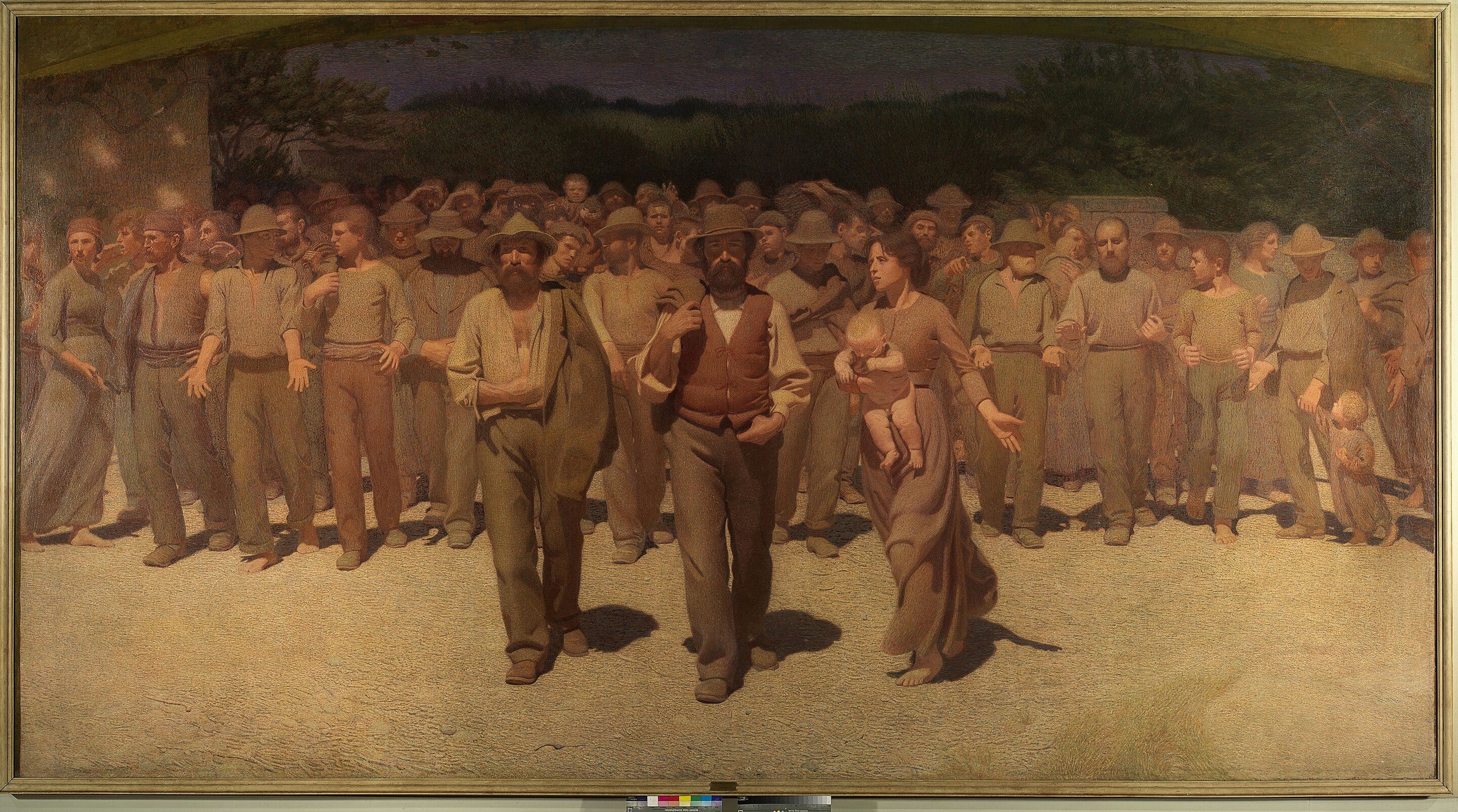
    “The Fourth State” , by Giuseppe Pellizza da Volpedo – Associazione Pellizza da Volpedo, Public domain, https://commons.wikimedia.org/w/index.php?curid=2588195
  • How urbanization has held the children captive

    Today, we’re talking about mobility—or rather, the lack of it. The vibrancy of a city, a place, a landscape, is measured in part by the presence of children and teens freely exploring their surroundings. Giardino Rivelato focuses on landscapes because, ultimately, our entire world is a kind of garden. Each of us inhabits an internal “garden” shaped by our daily environment—but over time, this space has shrunk dramatically. A century ago, children roamed vast territories; today, their worlds often end at the edge of a driveway.

    Spacious, living landscapes: most people crave this, yet we’ve built cities hostile to it. Streets feel dangerous, cars dominate, and parents hesitate to let children wander. Studies from the U.S. to Italy reveal a stark decline: in the 1800s, a child might trek 15 km to fish; by the 1980s, their radius collapsed to the end of the street. Now? Barely past the doorstep.

    Why? Let’s dissect the culprits:

    1. Cars as Killers of Space
      Modern vehicles are gargantuan “death traps”—prioritizing driver safety over pedestrian survival. A SUV’s height blocks visibility of anyone shorter than a basketball player. Urban planning bends to cars, widening roads and creating sprawl, perpetuating a vicious cycle: more lanes invite more traffic, not less.

    2. The Myth of “Safety”
      Perceived danger skyrockets, even as crime rates fall. Media amplifies fears, while eroded community ties mean fewer neighbors watch over wandering kids. Parents, understandably protective, now micromanage movement.

    3. Cities Built for Machines, Not Humans
      Post-WWII urban policies prioritized cars, sacrificing public squares, parks, and walkable streets. The result? Cities where children’s “adventures” are confined to bedrooms or tiny yards—if they’re lucky.

    Yet there’s hope. A simple rule in design: if children thrive in a space, adults will too. Playful, green, walkable cities aren’t utopian—they’re achievable. Dutch urbanist Jan Gehl famously said, “I’m not anti-car; I’m anti-car-dictatorship.” The goal isn’t to ban cars but to rebalance power, prioritizing people over steel boxes.

    So I ask you: Why do we tolerate cities that exclude childhood joy? Let’s demand landscapes where kids—and all of us—can breathe, explore, and grow.

  • Historic Gardens: Symbols, Themes, and How to Reinvent Them Today

    1

    Italian-style gardens—those classic designs with geometric shapes, laurel and boxwood hedges, and unnatural evergreen arrangements—could also be interpreted (at least in my opinion) as an expression of such an intense desire for nature that one might declare: “I want my entire world to be made of plants, leaves, and branches, even if I have to work tirelessly to achieve it.”

    Another crucial aspect of Italian gardens, particularly historical ones (or let’s say “ancient” gardens, which persisted until relatively recently), is their symbolic value. This symbolism isn’t limited to representing protection or an idealized, perfected nature. Rather, these gardens often had explicit themes, functioning almost like thematic parks.

    The universal yet deeply personal need for a garden manifests differently across eras, shaped by cultural influences. And, by the way, gardens today follow trends and directions that reflect our times: some gardens prioritize seclusion: “I want a garden to avoid intrusions—to keep people from peering into my home or observing my activities.” Others express a longing to reconnect with nature, whether through naturalistic aesthetics or ecological processes that mimic wild ecosystems.

    Then there are gardens designed to showcase wealth and abundance, using luxurious materials, exotic plants, or features like pools—spaces where cultural values are mirrored. Historically, gardens also served playful, escapist, or interpretive roles. Take Villa Torlonia in Rome, with its literary-inspired gardens referencing works like Orlando Furioso.

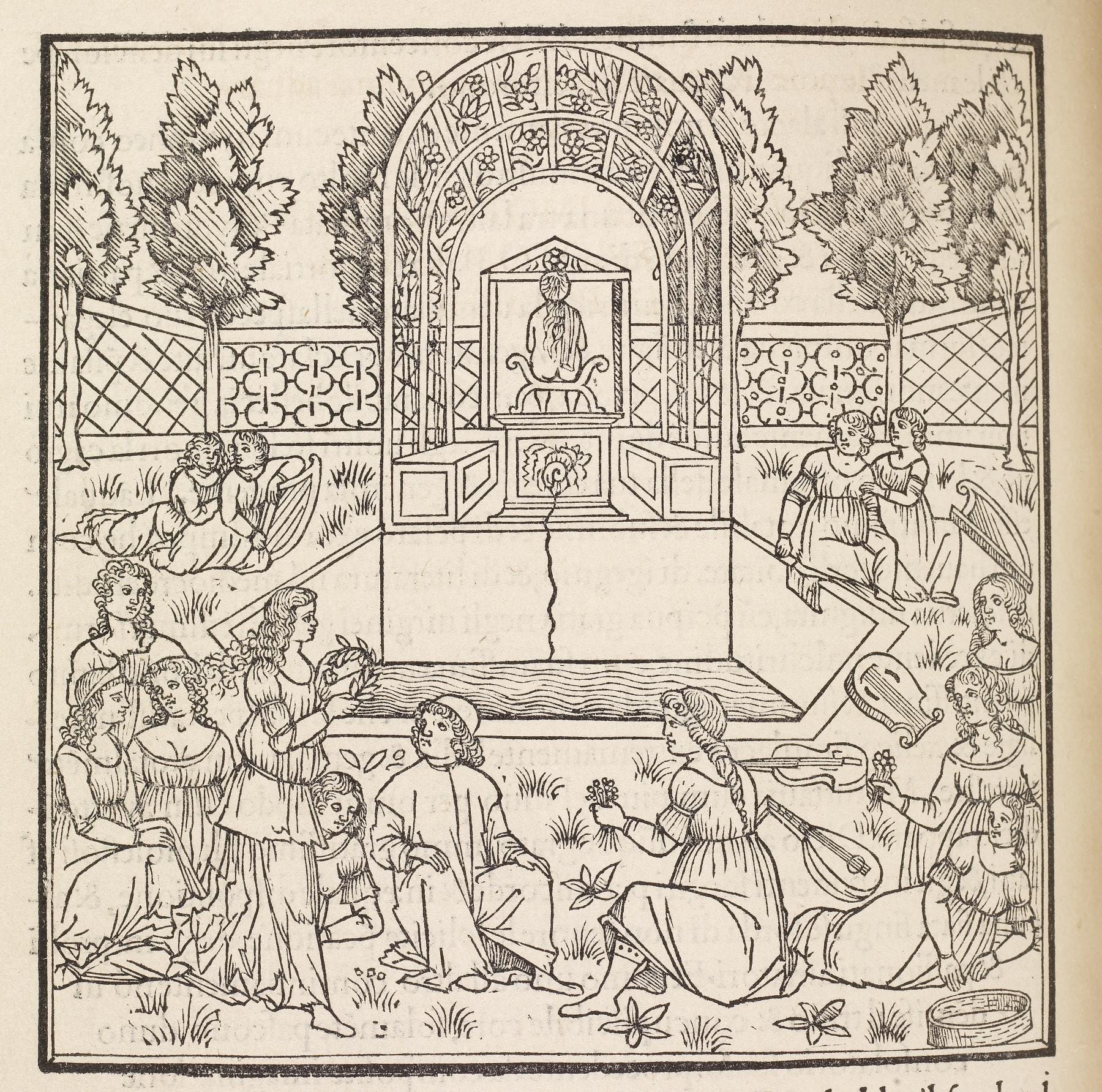
    Another example is the Hypnerotomachia Polifili (The Strife of Love in a Dream), a Renaissance text where gardens become allegorical labyrinths centered on a rose symbolizing love.

    2

    English gardens, as we know them today, emerged when the British “rediscovered” post-Renaissance Rome—a city then marked by abandoned spaces, forests, pastures, ruins, and bandits. The English sought to recreate this “classical” Roman landscape within their estates, blending geometric precision (like labyrinths) with symbolic narratives. These gardens weren’t mere decorations but spaces for leisure, reflection, and storytelling through water features, optical illusions, and architectural forms.

    I often wonder how such layered storytelling could apply to contemporary gardens. Imagine a suburban homeowner saying, “I want my garden to be a game—a place where visitors follow a path inspired by Game of the Goose or interactive narratives.” Envision guiding guests through a themed journey, inviting them to interpret botanical symbols or solve horticultural riddles.

    Yet today, many settle for superficial aesthetics.

    Historically, a beautiful garden demanded not just resources but intellectual engagement—every trimmed hedge or fountain carried meaning tied to art, philosophy, or power. Water features and geometric games were “serious whimsy,” blending amusement with deeper purpose.

    1

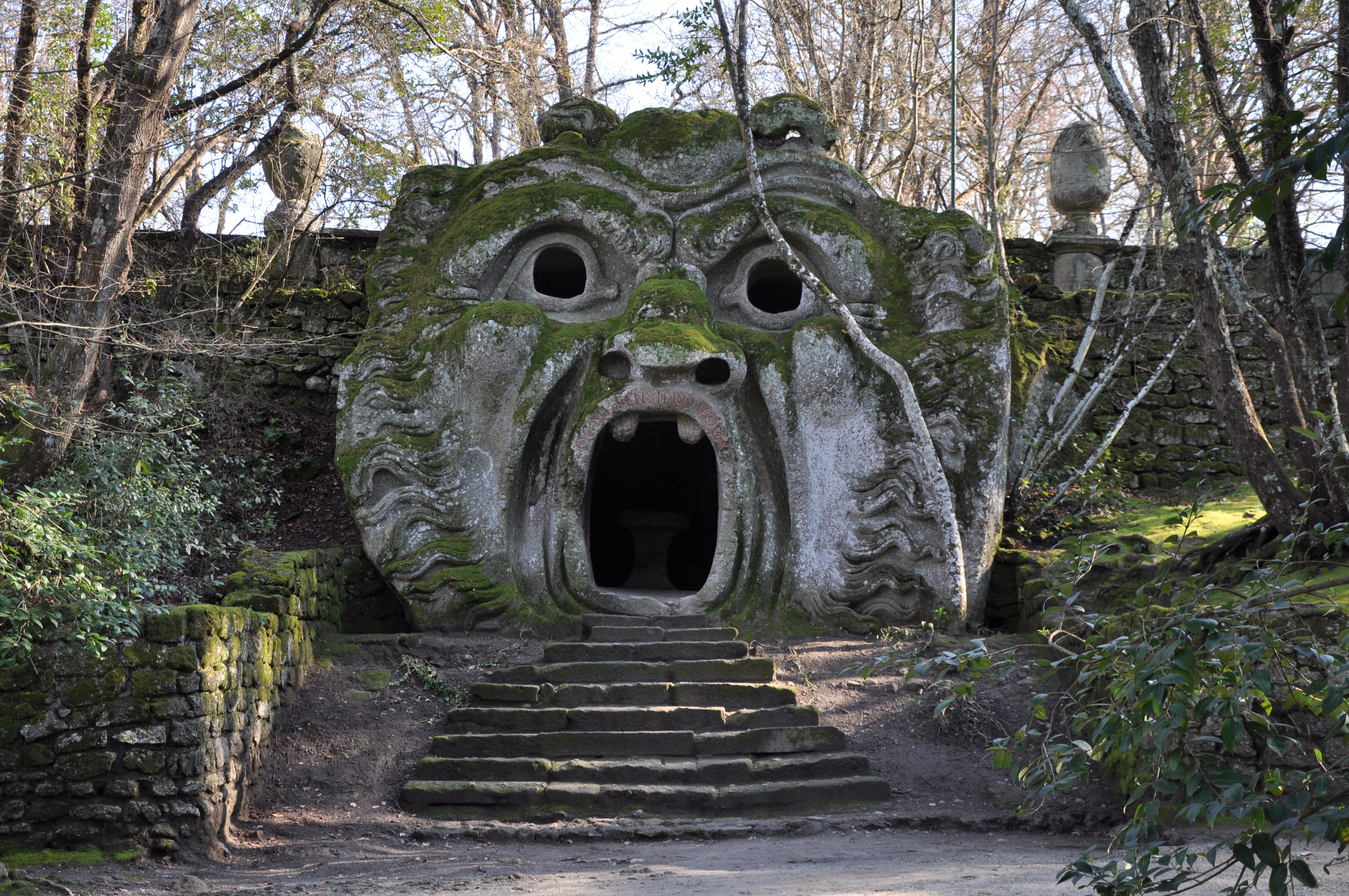
    https://commons.wikimedia.org/wiki/File:Bomarzo2013parco21.jpg

    2

    https://art.thewalters.org/images/art/PS1_91.400_Det_DD_T12_%20z9v.jpg