Giardini per persone non banali

Categoria: Uncategorized

  • Trees are political and blasphemous

    The space trees occupy is a political space, and every space where a tree stands is a space that is subtracted from the technical needs of our civilization, and of course our economy. The complexity of an ecosystems mirrors a lost biological and geological complexity, much like how glass can evoke the memory of crystal, to quote Italo Calvino, or how rich, stratified soil possesses a harmony that an engineered embankment will never match.

    Nature is perceived through maintenance

    Maintenance has rules that run throughout all the fields that need said maintenance. Maintenance, as a ritual practice and a manifestation of the technical landscape, has profoundly changed our perception of nature. We often assume that natural things simply exist, wether we make a decision or not, but no aspect of our human experience escapes this influenc of tech-and-budget-driven maintenance. Ecosystems, rivers, forests, prairies, rocks, air, the temperatures we experience, our bodies and minds, our interaction with intangible substances, both indoor and outdoor environments, sounds and noises, the disappearance of silence and the acceptance of a discordant mechanical background as a part of necessary silence, the acceptance of chaos that represents not vitality but neglect and lifelessness.

    Grazie per aver letto Garden and Landscape! Iscriviti gratuitamente per ricevere nuovi post e per supportare il mio lavoro.

    Behind each of these things, far in the distance there she blows: maintenance.

    Spaces are artifacts

    We, dwelling in our Western world, have come to accept artificiality as a desirable and natural state of space. A concrete-sealed piazza, if left to nature, is easier to manage than a simple meadow with tall grass and flowers, at least in our minds: this space, reclaimed to concrete, taken over by shrubs, contains a technical element that makes it logical within the framework of maintenance. A paved area functions like a large pipeline system, complete with inspection points: while it is impossible to prevent nature from taking its course (like grass growing), it is possible to intervene and regain control. This reflects a ritualistic, cult-like, dogmatic mindset that looks to the annihilation of all Nature as salvation.

    Technical and Bureaucratic Space

    Technical space isn’t necessarily physical; it can also be bureaucratic. It represents a landscape management technique that transcends natural phenomena, connected to them only by regulations. This is the lens through which we interpret and recognize the world: technical space is certain and measurable, and certainly it’s dogmatic, because it needs no justification. On the contrary it exists within its predetermined use, the genius loci, soul of a sacred practical sense: infrastructure and road transport, cable and pit, riverbank and cage.

    The Sacred Pragmatic

    What we consider pragmatic it’s actually sacred, feeding the sensation of a machine in motion, even if it actually fosters widespread, violent, and nervous traffic congestion. This defines the ethics and the aesthetics of public and private spaces, of physical and mental spaces, declaring a new form of beauty. Pragmatic here merely means easily reproducible. Traditional beauty can only be wistfully acknowledged; its beauty is insufficient to ensure its existence. Futuristic utopia has become present topology, the technological dream with no end outside itself is an ouroboros sustained by its body of economic debts, social, cultural, and ecological credits.

    Infrastructure is a god

    Infrastructure is an aggressively needy and fragile entity, demanding constant care. Plant and animal lives, including human ones, are sacrificed to it. Infrastructure, married to industry, requires no reasons and provides none. Industry, as a concept, needs to expand and grow, and it does. Infrastructure adapts as long as industry demands and produces, massively, without diversification, through emulation and reproducibility.

    Technology: a dream

    The promise of moving quickly and speeding up tasks—the great technological dream of freeing humanity from toil—creates new burdens, externalizes, and demands. Travel time has not decreased compared to 200 years ago; it remains the same, with distances increasing. The voracious infrastructure demands time and space, the only realities we inhabit; resources are limited: we cannot create new space, and we cannot create new time. The landscape thus remains residual, nature merely a leftover. All is existing is just a standard.

    Restoring Time and Space

    Can we transform ancient materials into new, creative, life-giving art, as medieval architecture did? Could the erosion of cultural and landscape capital be adapted to the Now, re-evaluated with new languages and harmonies? Restoring time and space by reusing the energies and materials that make up nature, like ancient artifacts and column used instead of bricks in a Romanesque church.

    It is difficult to justify Nature, it’s easier to for us if it gets eliminated.

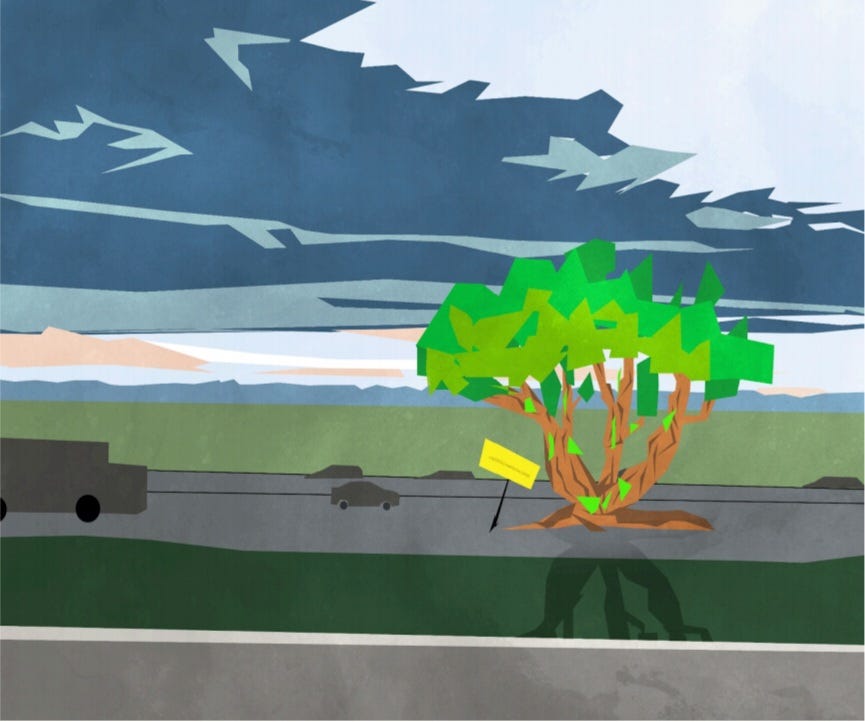
    So, what is the purpose of that tree?
    Grazie per aver letto Garden and Landscape! Iscriviti gratuitamente per ricevere nuovi post e per supportare il mio lavoro.

  • Boring things, living things

    Wandering through Istanbul (something that had never happened to me), one can come across a very characteristic neighborhood with wooden houses. Inside one of these houses in the Çukur Cuma district, you’ll find the Museum of Innocence, conceived, founded, and managed by the Istanbulite writer Orhan Pamuk. It collects objects that have a story and displays them. There is also a beautiful novel with the same name.

    For a period of my life, I found gardens unbearable. This period came at the end of another long period during which I was indifferent to them. In reality, I later realized that it wasn’t exactly the gardens themselves but rather the associations they represented. As a teenager, it seemed to me that they only served as a pretext for long and personal wars, from Paradise Lost to Vaux-le-Vicomte, all the way to the most ordinary gardens… I imagined the garden as a locus amoenus and the gardener as Samwise Gamgee, while often I saw people who, in order not to show their lack of skills, were willing to let every plant die. This was unbearable to me: I have a cousin allergic to pollen—I’m a doctor; I’ve played Assassin’s Creed—I’m a historian; I love my grandmother’s Bougainvillea, so I must be an agronomist.

    Thanks for reading Garden and Landscape! Subscribe for free to receive new posts and support my work.

    I’m exaggerating, but it’s such a common complaint that it’s hard to escape, and as a teenager, it disgusted me so much that it led me to reject this environment, which has always been fundamental in my family. But the dissent I expressed was important to me: the one against culture as an exercise of power, the culture that excludes. I think this is one of the reasons why among the many activities, gardening and garden culture in general inspire a bit of fear, a bit of disgust, a bit of boredom: “no, I don’t understand anything about plants.”

    Because gardens in Italy must struggle, they are in danger. All the things that have been said from the post-war period to today, I’ll make them inaccessible, building walls of concepts and experience, as if art were not also made by those who approach an ancient subject with fresh eyes, as if everything possible has already been given and said.

    I am usually quite liberal when it comes to gardens. I believe that a supposed ugliness or a lack of care, are not what ruins them the most, but rather the intention and the love they have experienced… whether there is a consequentiality or not is another matter: as long as a garden makes you want to stay outside, to hide, to read and eat, to kiss, to play, then I think that garden, even if made only of Bergenia and Begonia, needs to exist, it has the right to claim its strength. It reminds me of the Museum of Innocence I mentioned earlier: a place of true stories, not idols.

    Just like in Paradise in Eden.

    Eden is a steppe, and in the middle was the most beautiful Garden of all, created by the best Gardener specifically for us, whom we were supposed to care for; we couldn’t manage it, we preferred to take leaves to cover ourselves and hide: we no longer saw love in the Garden, only duty. It had become an uninhabitable place for us. The good thing is that now the task is to find it again, to recreate the Garden, experimenting and, above all, following desires.

    “Scintilla celeste, e impulso sovrumano vuolsi a fare un sommo poeta”1

    Gardens often reflect who we are, much like homes: houses filled with books are beautiful, but if there’s never a murmur, never anything unexpected, never a scream or a buzzing bee, mold quickly takes over.

    1

    “A heavenly spark and a superhuman impulse are needed to a supreme poet.” Giacomo Leopardi, Letter to Madame de Staël, 1816

  • On Revelation and Ecology

    1

    Months ago, while talking with a philosophy student about Science and Metaphysics, he made an argument about a sort of pantheism and I asked something about quality and quantity – like “so god is only the whole of natural things?”. He suddenly looked scared and said “that’s too medieval and also no.”

    What I find curious is that the more I get entangled with ecology, the more I think in that way.

    Otherwise I should think that a fungus is God.

    Which is nice if that’s your faith, but feels quite lazy if you’re a secularised westerner.

    As a person invested in observing gardens and landscapes in relation to the people that inhabit them, Ecology is interesting as a theoretical, philosophical subject for many reasons, I think.

    It crosses  aesthetics in landscape studies and can go into moral speculation from that point.

    Ecology is a basically infinite closed system, therefore virtually inexplorable in its entirety, which is why many see it as a good substitute to theology by our contemporary standards: it’s measurable but it’s complex: very, very complex.

    Also physicysts started to dig in it, of course.

    You see that in many scientists that touched complex systems, because it’s the complex system par excellence.

    So philosophers can feel like they’re scientists and scientists can feel like they’re philosopers and all of them can add a cup of mysticism from time to time, not on an academic paper by the way, but surely in the way they understand and narrate it.

    It is enough that you never arrive at a finalistic vision, to make them happy.

    It’s not uncommon to hear people claiming an overlapping of what we know about physics and ecology with buddhism (at least in western buddhism).

    This can be because of a lack of revealed truth, that what we know is never by revelation, because that cannot be demonstrated, of course. This is also for the absence of finalism in both domains. Everything has come from observation, just like the Four nobles Truths.

    You’ll therefore read about famous people saying something like “Buddhism is science” (I don’t know – Richard Gere? I heard saying that in interviews2). I think I can safely assume that this thread, if explained in these terms, could be accepted by a fair amount of people in the West.

    This by the way put a barrier between a medieval way of thinking and ours. At least I have to accept that while reading Eckhart I really struggle in accepting finalism as an argument, and could that be connected to my ecological studies, I fear. I have to work around with causality in some way.

    So I must conclude that I find nature and ecology complex and godless. I don’t look for the purpose of a forest canopy to find metaphors for, let’s say, my faith. The more nature shows itself as sense-less, the more I understand revelation as a concept. A handful of Hebrew language lessons from a dear and knowledgeable friend came in help, too, in perceiving that the God that reveals its name on the Sinai is not something that one can easily talk about. It’s not a being, it’s not a spirit, it’s not a something. It’s beyond, before and after whatever things.

    And here I stop.

    But the revelation that such a THING is concerned by our existence, is already too much, and that can only come from revelation, never from observation. It’s unsettling and devastating. Of course reality itself is unsettling and enormous, it can make you lose reason, but it’s not as much that THING, that Name. That’s revelation.

    In nature I find connections and correspondences, which aren’t true because I find them, but I can see them nevertheless, and that seeing is what revelation seems to be about in the end.

    Now, if you face the problem with finalism as a person that has some kind o faith in that Being: you try to apply it to your daily life: “the skies are proclaiming the glory of God THEREFORE we must do something about that”.

    In ecology you have primarily observation, only after, when morals and human need come in, you do something with what you have discovered. It’s something else from an ecological knowledge.
    That HaShem seats on the storm3, that his name is Sprout4, can be that everything’s a reflection of God’s relationship with the world (“love”?), but you won’t find it in a mere natural fact, just like you won’t find it in the fact that there is a trophic system. Only in things that you can understand, you could find a sense of this relationship, because creation, as a whole, is a narration, and of course any narration brings in itself the message and the reality of its narrator, and cannot be divided. A comma in “Crime and Punishment” isn’t Dostoevksij, but at the same time he poured himself in it at that moment, and his whole corpus says something about him.

    For what we usually call God, of course, no limitation whatsoever can occur, we’re not talking about a demiurge. Because he is “the father of orphans, the champion of widows”5. There’s something interesting on this matter about the scattering of the soul in being active in Eckhart’s second sermon, but I don’t think I’m able to explore it now.

    So why do I see a link between medieval thinking and ecological studies?

    Because as far as I understood (and that could be where I’m wrong about medieval logic), you don’t need to demonstrate that God exists by showing something happening in nature, it’s quite the opposite: if something happens in nature is because of God, whether that’s visible or not, because the causal chain began outside of the physical world, not inside of it. Otherwise, you enter the domain of recursive causes, of circular reasoning, of a perpetual motion that is not thinkable in our universe.

    Ecology, just like physics, can even explain itself, as a chain of physical, chemicals and biological events, but can it go into metaphysics, beyond its origins without disappearing into other domains?

    I’ll use as an example, a Ghostbusters marathon on TV during the lockdown. Since I’m relegated on a sofa I watched it and thought about Gozer the Gozerian, the fictitious mesopotamian god appearing at the end of the movie. While we’re convinced that spirits and gods see God in its reality, maybe they’re just greater beings, quantitatively speaking, therefore they experience the same reality as we do. Which means that you can’t find God, you cannot prove anything about God unless it comes from a revelation.

    Somewhere in the book on the Experience of God David Bentley Hart states that Thomas Aquinas said that an infinite world as Aristotle said was logical and that only by faith he rejected it, and that even the world was infinite, this didn’t affect God’s status. This reminds me of the idea of an eternal recurrence of Big Bangs, of how the way natural processes in our ecosystems happen are used as a proof of God’s absence.

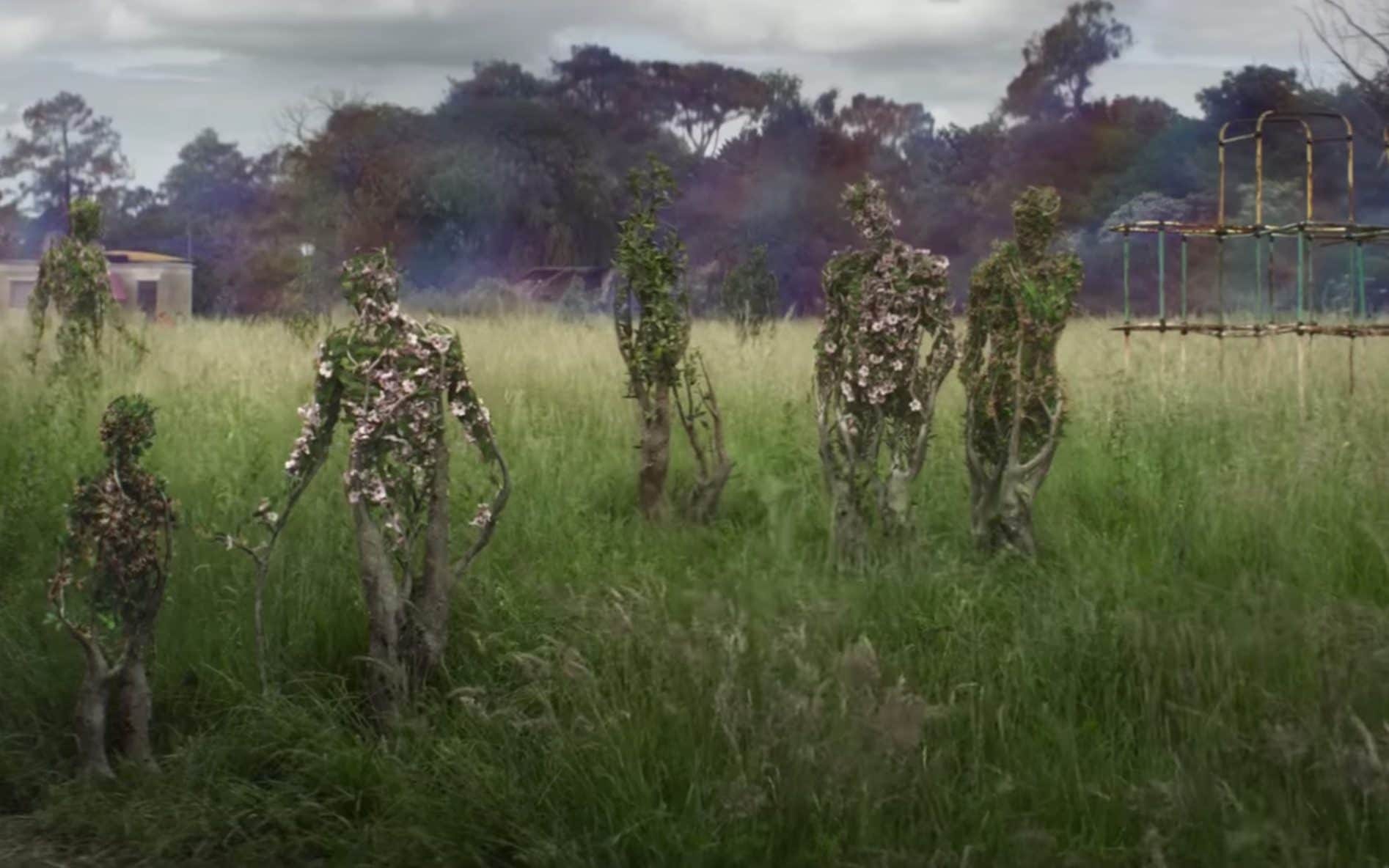
    Like in the movie “Annihilation”: how can that disprove anything about anything? Any unexplicable fact, any miracle, is just “natura ignota”.

    6

    I’m not a philosopher, I’m not trained in logical thinking or anything, it’s just something that goes behind the curtain of my mind, but I feel like this is quite a simpleton’s way of thinking and hope it can be fruitful or even interesting, just to spend some time.

    1

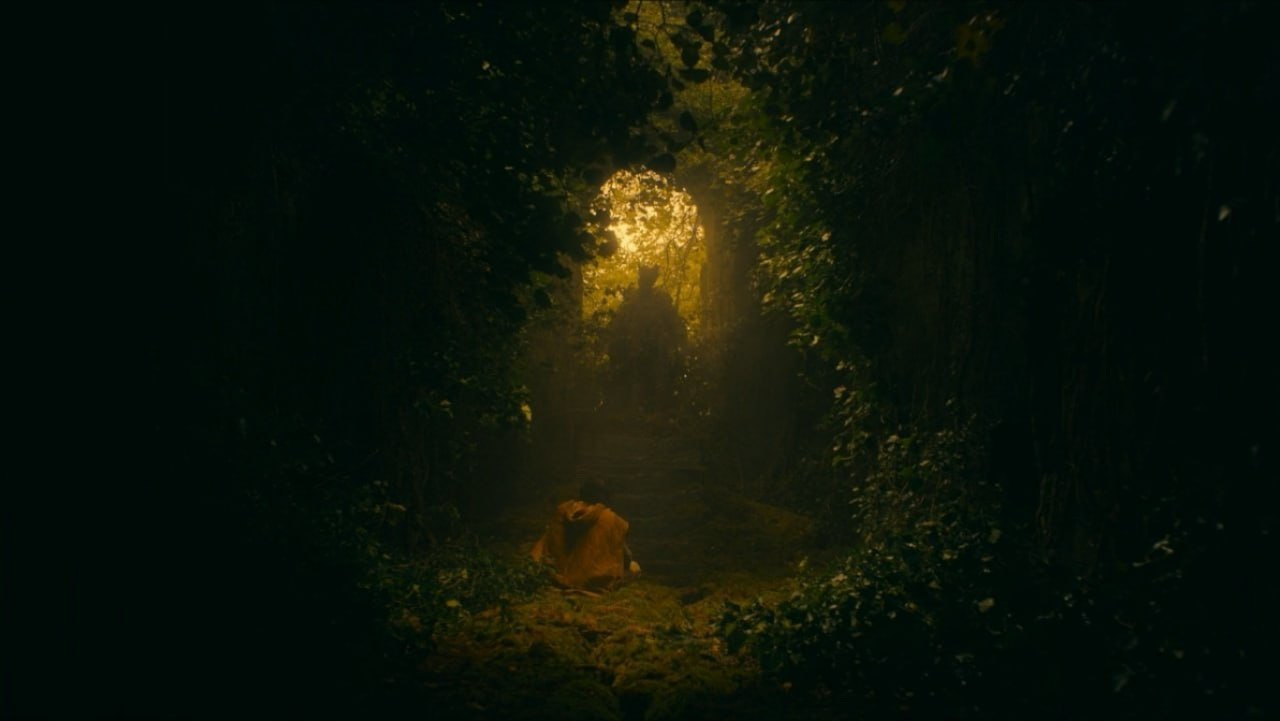
    From The Green Knight by David Lowery, 2021

    3

    Psalm 29:10

    4

    Psalm 72:17

    5

    Psalm 68:6

    6

    From Annihilation by Alex Garland, 2018