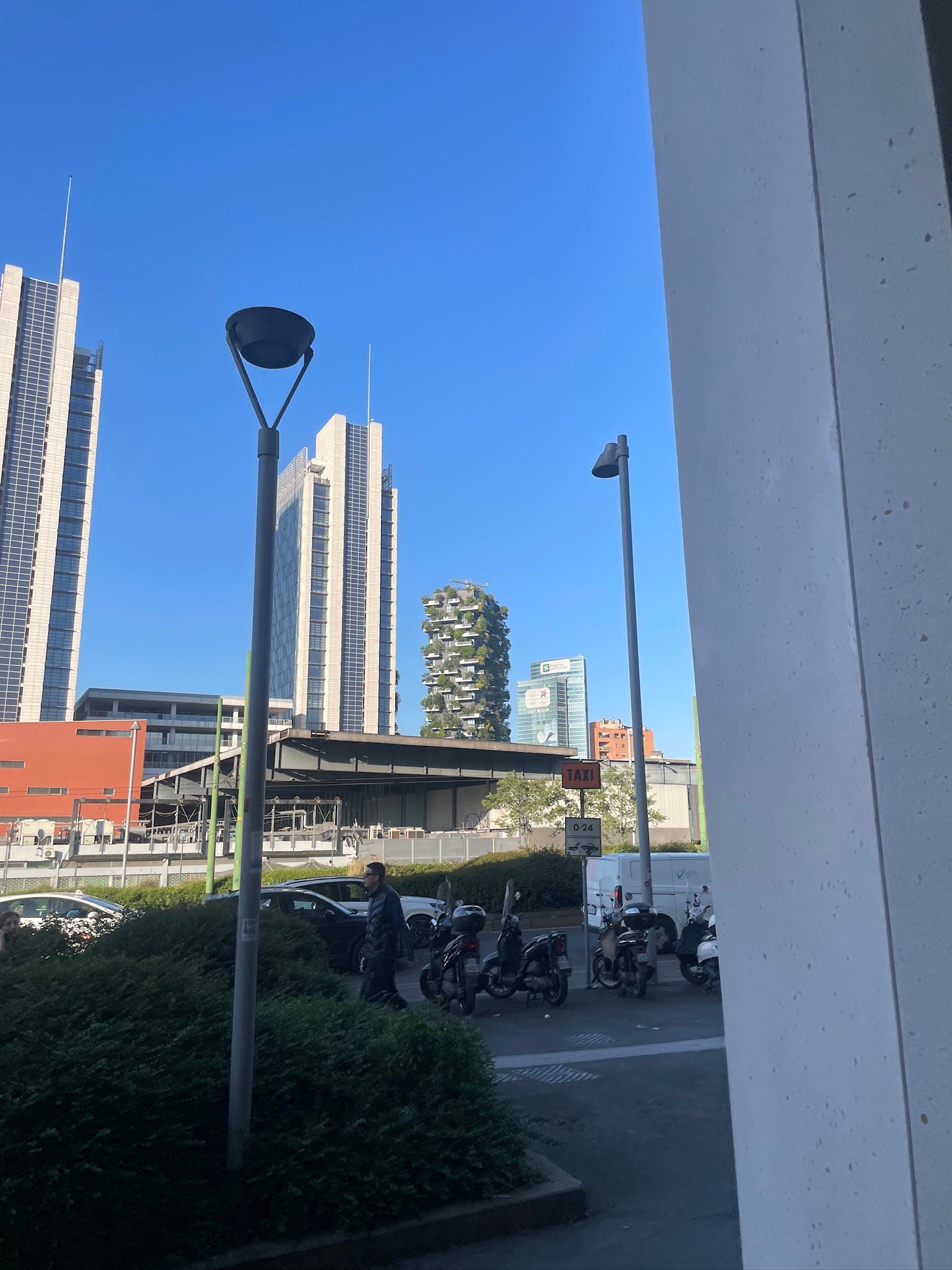
The problem with the “Bosco Verticale” skyscraper in Milan is…
Well, if we take it as an idea… “It’s a good idea because it manages to enter the mainstream by proposing a pop vision of architecture, with all its flaws, but it conveys to laypeople the idea that plants can be placed on balconies and terraces.”
Now, let’s calm down.
First, my mildest criticism stems from the fact that it seems like a wacky idea, considering that in practically every Italian city, buildings with balconies and terraces are already covered in plants, even large ones. Maybe less so in Milan than in Rome, but does that mean an idea isn’t an idea unless it’s proposed in Milan?
I mean, here in Italy, many would agree, in a way similar to how a child’s idea is often valued less than that of an adult. Yes, it’s not ideal.
One could counter that it’s not so much about bringing the concept into the mainstream, pop vision of the terrace but rather into the mainstream vision of starchitect design grappling with the terrace. However, this isn’t a problem of general culture but rather an issue within the architectural and design community.
The other problem concerns the idea of legitimizing a type of greenery that requires not just high maintenance—both economic and energy-wise—but also immense time and financial investment to implement in the first place, when low-tech solutions could be far more accessible and effective for cities.
There’s some similarity here to consumption patterns. The idea of replacing everything you own with objects made from supposedly sustainable materials. Sustainability isn’t just about the material or the idea itself but also how things are used. It’s the affection for a place. A city that uses less air conditioning is cooler than a city full of vertical skyscrapers with forests but also packed with cars and air conditioning units spewing heat.
Another issue relates to landscape design: the tendency to prioritize short-term results. Often, temporary garden installations only achieve interesting outcomes through massive financial investments and the use of mature, sizable plants. This is because young plants in their early growth stages are less visually appealing and harder to “sell.”
One might argue that the only way to sensitize people to the idea of urban forests is through vertical forests—man-made structures with greenery that require enormous financial investments to deliver such striking results that they shift public opinion.
But I wonder if this doesn’t inherently distort the perception of what a forest is, should be, or could be.
Yet another problem arises here: the inability of designers to tell stories. If the stories we tell are self-contained, strung together by fragile threads linking unrelated elements; if we try to craft narratives where reality offers only vague imagery, then perhaps we shouldn’t be surprised when those threads snap, failing to weave a tapestry and instead leaving a frayed, stunted mess.
I wonder if the root of this isn’t the fact that designers are no longer asked to create something with a defined, singular function but rather to generate meaning and significance where none is perceived, in pursuit of a “total-and-definitive-work.” Architecture, in the broad sense, is tasked with creating a new world where such stories can come true.
But isn’t it the stories themselves that create the new world?
Bosco Verticale from Garibaldi metro station
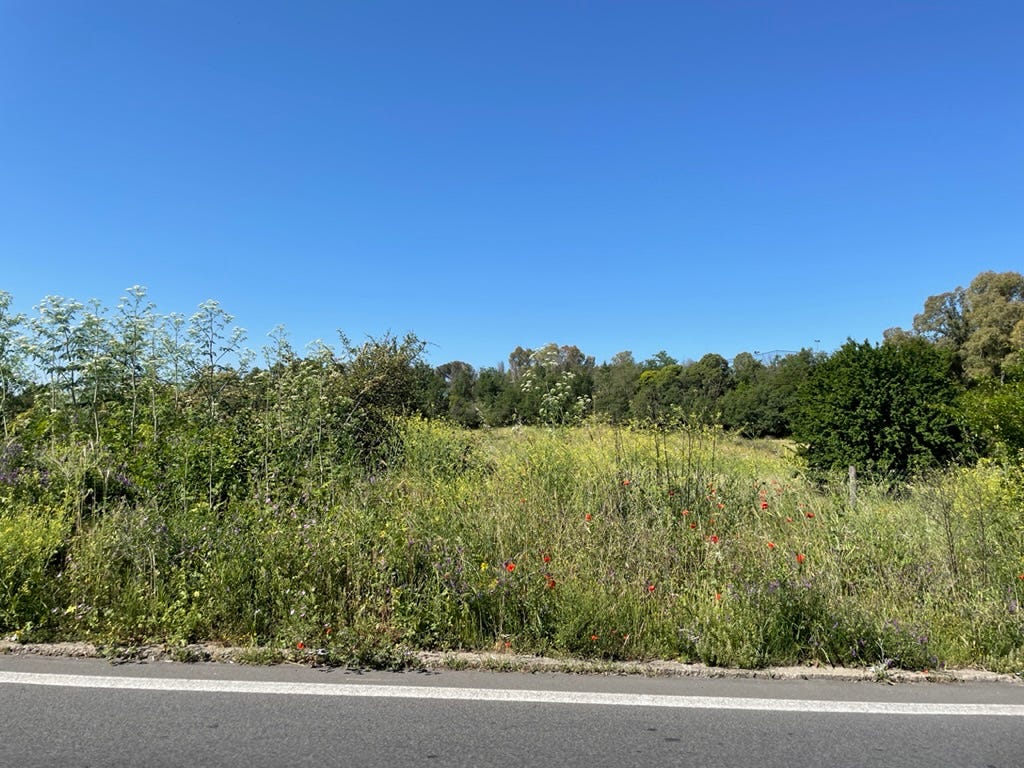
A typical roadside in Rome (here on the Via Appia)
Lascia un commento