There is something in landscape architecture that I cannot quite define. There is something not very describable, not very explainable about the way in which landscape architecture isn’t perceived or maybe isn’t something useful or fundamental. If you think about housing, then you will know that an architect or an engineer, or everyone who had preparation, is useful and can be useful for the cause, for the attainment of a goal. The goal being not only putting a roof on someone’s head, on a family’s head, but also to create an environment that is well organized and that makes the most out of what is there. In the same way, how can you explain how landscape architecture is portrayed and explained to people? How can you explain landscape architecture to those who don’t know what that is?
For instance, if you try to design a house, you will find a lot of problems, a lot of difficulties if you are not prepared, if you have no experience, no experience or knowledge, culture. But if you try to arrange a space in a landscape, an outdoor space, then this space is something that can be more or less well understood by everybody. So, I don’t want to say that being a landscape architect means, I don’t want to say that to be a landscape architect you need to push away everybody who tries to attempt in doing that, because just like the way an architect can try and teach to someone, just like an architect can teach people to build a house, then a landscape architect can teach people or communities to make sense of the space they inhabit. Because if we think only in terms of technical capabilities, then what we’re talking about is not landscape architecture, but mere engineering, which is anything but mere, of course: it’s something else.

So, whether we accept the fact that a landscape architect is just someone who does something that is not useful, not important, and whose role can be covered by literally anybody who has some knowledge, or it has to prove its worth, or its worth must be explained. What is the difference between an environmental engineer and a landscape architect? Why is a landscape architect useful? What is our role in society? Is it to create, to design gardens? Is it to design nice parking spaces? Is it to create fashionable designs or spaces that can help the value of the land where they are situated?
What is my worth as a professional? What is the worth of my professional role in landscape architecture? What can I bring to the world, and what can I do that nobody else can do? And if there is nothing that other professionals can do, cannot do, that I do, then why should I be called, and what’s my purpose? I often feel that when people in my field try to justify their existence by saying “people don’t know that they can call this kind of professional. I know this and they’re illiterate”. This sense of rage at the idea that people that don’t have much to do with our job will have opinion on it that happens, I often feel like there is a problem with a classist worldview. And this worldview comes from the personal conviction that a promise must be fulfilled. The promise is that my education would be beneficial not only to me but also to other people. What will happen if we discover that our field is not useful? What will happen if we discover that a landscape architect is basically a useless character in the theater of the professions?
I live in a place (Italy) where an environmental engineer is a million times worth more in terms of value, in terms of consideration, cultural importance, than than a landscape architect. Of course, some landscape architects are considered important, but that is a very posh understanding of the profession. It’s the idea that a landscape architect will recreate Versailles or something like that.
But then what is required by our society, by our, by our job boards is to have an environmental engineer. That is subjected to be viewed more as a soldier than an intellectual or someone who needs to work on the interpretation of a place. Someone who calculates and generates a product, and that product is the promise that that landscape will produce the expected results. And often, as landscape architects work on that tone, we work to prove that we are capable of doing that, of filling the role of an environmental engineer. So, we will try to deepen a bit some aspects, some questions, but that is not something that is possible. That is not something that is doable. Whether we accept that we are not in competition with environmental engineers, or we’re doomed to disappear. Why? Because it’s important to perceive that there are layers.
But then there is another problem that arises, and that problem consists in the fact that there is not enough money to pay all the professionals that need to be involved in a project. So then there are two scenarios. The first scenario is that in one case, you will have less people to do more jobs that they’re not really able to do. And in the other, in the other scenario, you will have a lot of people doing a lot of jobs for not very much. I don’t know which one is the worst. Because more often than not, these projects, even when they’re broken down into very small parts, are not characterized by easy tasks. And this shows that money isn’t managed very well, in the top-down flux that goes thrugh the professional chain. And of course, there is the problem that these jobs need to be realized, passed on to the workers who will physically realize the jobs. Another task that is not very easy.
Now, I am not sure that Italy has the same situation as other western countries, but surely there is the idea that many people need to conform to a work that is less than fulfilling for a pay that is less than ideal. And that is valid both for white collars and blue collars. I think I’m heading into a difficult territory. I don’t have enough data or cognition of these matters to go further, right now. But I just want to say that I’m trying to explore this idea of what is the role of a landscape architect in my society, what is the duty, and what is the utility of a landscape architect. And there are so many points to be made that I find it difficult to get to a final point.
I think that my position as a student was the most sensible one, which is that the goal, the dream of any landscape architect of conscience should be to see the end of all landscape architecture.
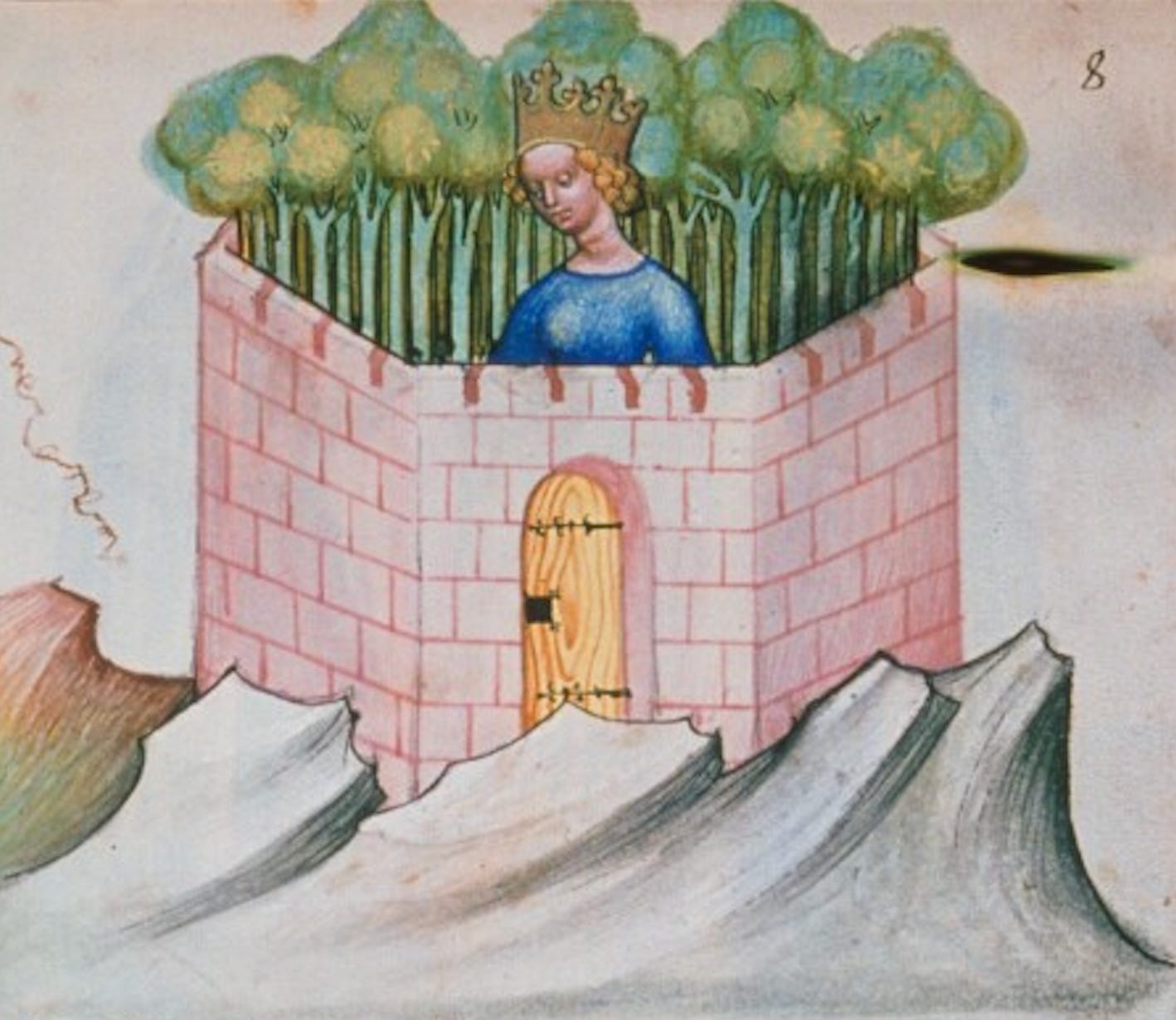
Hanging gardens of Semiramis at Babylon – Institute of Material Culture of the Middle Ages and the Early Modern Period, Austria – CC BY-NC-ND. – https://www.europeana.eu/en/item/15501/003433A
Biber by Ahlers, Henrik (Herstellung) (Fotograf) – Deutsche Fotothek, Germany – In Copyright – Educational Use Permitted. – https://www.europeana.eu/en/item/188/item_6ZBEXBR5OWVVEQKOTIJ5OEJ4GCTUYJEJ
Lascia un commento